For Individuals
Join for free & get our special gift basket of complimentary resources & opportunities to grow your business, elevate your career, & achieve your professional & financial goals.

Across every industry, inequality still holds women back. Too many are forced out of corporate careers because workplaces fail to support caregiving – and as a result, fewer than 9% of CEOs are women.
Even when women strike out on their own, barriers like bias, funding gaps, and lack of support remain – so 1 in 5 businesses don't make it past two years. The odds shouldn’t be this stacked against any of us.

Join for free & get our special gift basket of complimentary resources & opportunities to grow your business, elevate your career, & achieve your professional & financial goals.

Onboard your female employees (for free) to access vital L&D resources & opportunities, to increase productivity & improve organisational culture, motivation & outputs.

Invest to help improve DEI across industries & economies, provide equal opportunities for women in work & business, and create impact & legacy for the future female workforce.

Supporters...
5,490,740 small or micro enterprises operate in the UK.
468,000 new startups were launched in the first half of 2024.
Combined turnover of UK SMEs in 2024 is £2.8 trillion.
813,000 is the increase in sole trader businesses since 2019.
63% of SMEs see tax burdens as a major concern in 2025.
70% of SME leaders feel politicians do not take their needs seriously.
Many SME owners are worried about the impact of the new Employment Rights Bill due in 2026, including higher staff costs, more admin and tribunal risk.
Reasons women start a business: 60% to be their own boss, 49% to balance life demands, 44% to pursue passions/hobbies, 36% to have more flexibility as a parent.
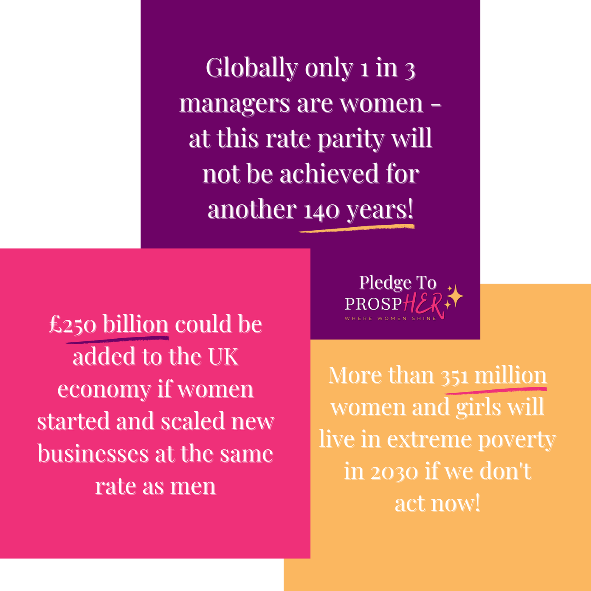
Up to £250 billion of value could be added to the UK economy if women started and scaled new businesses at the same rate as men.
Roughly one million UK‑employed mothers run their own businesses or side hustles.
Women‑owned businesses are particularly strong in health, social work, education and food sectors.
Most profitable SME sectors highlighted include alcohol‑free beer, e‑commerce, bookshops, educational technology, hotels, VR and immersive technology, and food trucks.
Sectors with the most SMEs: construction, professional/scientific/technical, wholesale & retail trade, and admin & support services (figures shown in thousands of businesses).
The most profitable SMEs tend to be community‑oriented, offer physical spaces, or meet lifestyle trends such as fitness, home improvement and flexible hospitality.
Three out of five new private sector jobs in 2024 were in SMEs.
One third of SME owners take less than two weeks of holiday a year.
7 in 10 owners expect growth in 2025, while 8 in 10 expect to hire more people or increase pay.
Top ways SMEs plan to build resilience in 2025: improving financial performance, investing in employee and team development, focusing on customer acquisition and sales, driving business growth and innovation, and upgrading technology and processes.
Globally about 1 in 3 managers/supervisors is a woman, at this current rate means parity will not be achieved for another 140 years.
At current rate of progress, by 2050, women will spend on average 2.3 more hours per day on unpaid care and domestic work than men.
More than 351 million women and girls will live in extreme poverty in 2030 if we don't act now.
Globally women only hold 27% of the seats in parliament.
Can't Find What You're Looking For?...